Subimperialisms of UAE, Rwanda, India
Weaving our Worlds has monthly study in struggle conversations and this month we focused on understanding UAE, Rwanda and India as subimperialist powers. Sub-imperialism refers to where a growing political power, while not being perceived as a historic major global imperial power, behaves in an imperialist manner within its own or neighbouring regions and acts in ways that also align with the interests of dominant imperial powers.
Subimperialism helps us make the connections between these seemingly different geographies. Using the lens of subimperialism to situate the actions and interests of the UAE, Rwanda and India, we understand these regimes’ roles in the occupation and genocides in Sudan, Congo, and Kashmir; their military and trade domination across Asia and Africa; their use of soft power and ‘post-colonial’ branding to whitewash war crimes; and their alignment with US-led global imperialism.
UAE’s Subimperial role in Africa:
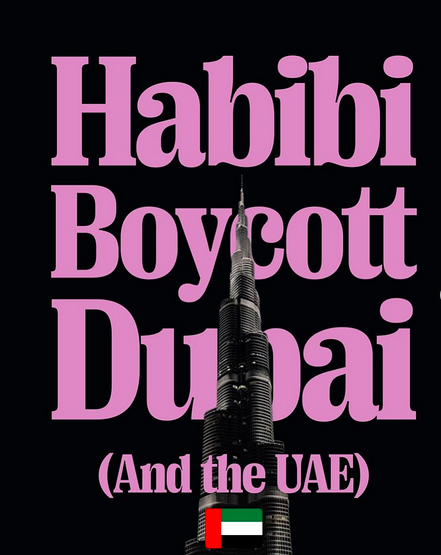
“The United Arab Emirates has become a sub-imperial power in Africa, investing in ports, airports and infrastructure projects to extract resources and increase its global political and military influence. Moreover, the UAE has worked closely with militias and employed mercenaries in various conflicts, effectively influencing who governs these countries and how they are governed, thereby positioning itself as the region’s new kingmaker.”
[Source: The emerging sub-imperial role of the United Arab Emirates in Africa, by Husam Mahjoub in TNI here ]
“Along with its expanding port and infrastructure foothold in Yemen, the UAE has also been developing a growing network of commercial ports across the Horn of Africa, which are frequently attached to provisions for military, police training and/or military bases. This expanding presence amounts to a broader regional economic and military intervention from the Persian Gulf to the Horn of Africa. UAE maritime ports in particular have long been strategic assets for the US military in the region.”
[Source: The UAE and the Infrastructure of Intervention by Rafeef Ziadah in MERIP here ]
“The UAE, as a peripheral nation that engages in imperialist practices within its own region while remaining dependent on the United States (that is, on a core imperialist power), exemplifies the transformation into a subimperialist state that many other regional powers are undergoing. The UAE’s role in Sudan is part of a coherent, well-financed, and regionally expansive project: a subimperialist agenda that combines economic extraction, authoritarian alliance-building, and counterrevolutionary politics under the cover of diplomatic sophistication and global partnerships. Sudan, tragically, is one of its central laboratories.”
[Source: Counterrevolution, gold, and global impunity – The UAE’s subimperialism in Sudan by Husam Mahjoub in LINKS here ]
From Palestine to Sudan
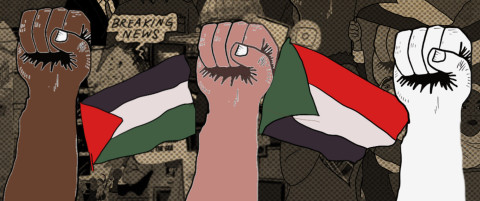
“On August 13, 2020, the UAE became the first country in the Arabic-speaking world to normalize ties with Israel in over 20 years. The UAE sows and reaps from the seeds of discord, authoritarianism and dispossession between Sudan and Palestine. Its rise is a result of its signing of the Abraham Accords and its participation in Euro-American restructurings of the Arab world. This position has given the UAE the political purchase necessary to build its own commercial and political empire despite the obvious calamitous consequences associated with it.”
[Source: Ghosts of imperialism’s past, present and future by Bayan Abubakr in Mada Masr here ]
“Israeli defense technology company Controp Precision Technologies Ltd. announced the establishment of its first subsidiary in the UAE. The new branch, Controp Emirates Ltd., will operate from Abu Dhabi’s Free Trade Zone with full ownership retained by the Israeli parent company. This move marks the first Israeli arms venture in the Gulf since the 2020 Abraham Accords.”
[Source: Israeli weapons firm opens first UAE branch in The Cradle here ]
“The UAE has been the primary buyer of Sudanese gold since at least the early 2010s and remains the leading destination for smuggled gold from Sudan. Also, since the 1970s, Gulf states have invested in Sudan’s agricultural sector as part of efforts to tackle regional food insecurity. Plus, with a 700-kilometer coastline along the Red Sea, Sudan is strategically important for the UAE’s regional ambitions to gain control over key ports. Finally, one could argue that the UAE’s involvement in the war is to secure its position as a leading provider of financial services in Sudan and facilitate Gulf investments throughout the Sudanese economy.”
[Source: Five Reasons Why the UAE is Fixated on Sudan by Mohammed Kansa in Al Akhbar here ]
Rwanda’s Aggression in Congo
“For the last three decades, Rwanda’s leader Paul Kagame has fueled conflict in the Democratic Republic of Congo and ransacked its natural resources. The US and the EU have been Kagame’s partners in crime so they can get a share of the loot... The International Crisis Group has described Rwandan actions over three decades as a pattern of long-term territorial expansion including grabbing mineral-rich regions.
[Source: The West Has Helped Paul Kagame to Pillage the Congo by Andy Storey in Jacobin here ]
“Rwanda and Uganda act as conduits for resource extraction, exporting minerals from the DRC, and how the profits of this trade flow through the Gulf states to Western markets. In this network, Congo becomes the epicentre of a global pipeline linking African subimperial powers, like Rwanda, to Gulf petrostates and sub-imperial powers, like the UAE, and Western tech conglomerates: a chain of exploitation that transforms human suffering into industrial capital.”
[Source: Technologies Of Genocide X Abdullahi Halakhe, in the Polis Project here ]
“When people in the United States watch the news and see Kendrick Lamar, see John Legend, see Dave Chappelle with Paul Kagame, and the usual people — you know, you have Tim Cook of Apple also with him — it creates an image that this is a great leader, a noncriminal leader, who’s helping his country. So, it’s a form of soft power to actually cover that. And we have to expose it.”
[Source: Congolese Are Paying the Price” for Western Demand for Minerals & Support for Rwanda’s Paul Kagame, Interview with Kambale Musavuli in Democracy Now here ]
On Rwanda-DRC Peace Agreement
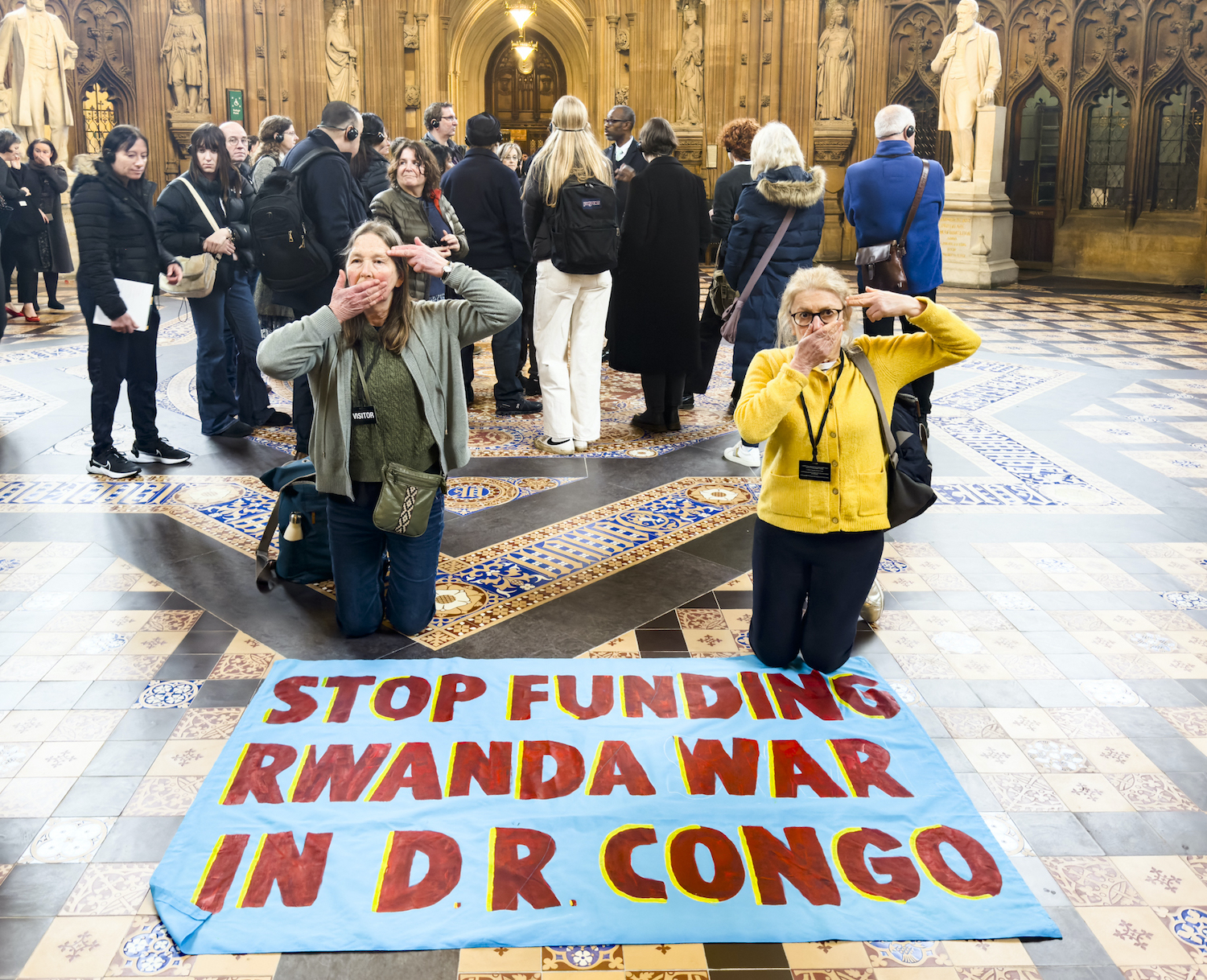
“The foreign ministers of Rwanda and the Democratic Republic of the Congo sat down with Secretary of State Marco Rubio to sign a so-called peace agreement, but the agreement does not even name the aggressors, Rwanda and its M23 militia, as such… Despite stating that the two countries will respect one another’s territorial integrity, the agreement does not say that Rwandan troops must immediately withdraw from DRC or even acknowledge that they are aggressors there. Thirty years of UN investigations have also documented Rwanda’s theft of vast quantities of Congolese minerals. The agreement makes no mention of these crimes.”
[Source: Aggressors Unnamed in Rwanda-DRC “Peace Agreement,” by Ann Garrison in Black Agenda Report here ]
“The June 2025 “peace” deal between Rwanda and the DRC lays bare the United States’ role in entrenching the extraction of minerals under the guise of diplomacy. For decades, US backing of Rwanda and Uganda has fueled the violence, which has ripped millions of Congolese lives apart while enabling the looting of the country’s mineral wealth. By legitimizing Rwanda’s territorial advances, the US-brokered agreement effectively rewards aggression while sidelining accountability, justice for victims, and the sovereignty of the Congolese people.”
[Source: Shafted: The Scramble for Critical Minerals in the DRC by the Oakland Institute here ]
“There hasn’t been any sanctions. There hasn’t been any military aid being withheld from the Rwandan government. In fact, Rwanda has been rewarded in the midst of this past three years’ aggression where they’ve surrounded the city of Goma. The European Union has doled out 20 million euros in 2023, again in 2024, to the Rwandan government. In addition to that, the European Union has entered into a critical minerals deal with the Rwandan government to get access to critical minerals.”
[Source: How Rwanda Has Fueled War in DRC as Western Countries Look Away, Interview with Maurice Carney in Democracy Now here ]
Indian Occupation of Kashmir
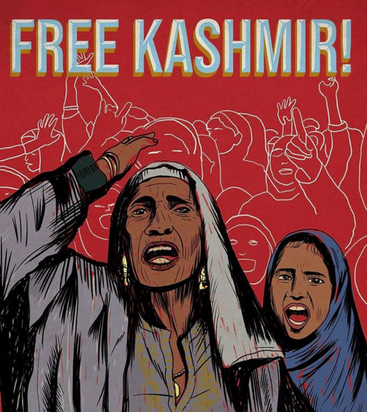
“Kashmir is the world’s most densely militarized region. It is occupied by approximately 700,000 Indian troops. Human Rights groups reveal approximately 70,000 killed and 10,000+ enforced disappearances amongst other violations by the Indian forces since the armed resistance began in 1989. A mix of custodial executions, torture, mass incarcerations, rape used as a weapon of war, the world’s first recorded mass blindings, curfews, crackdowns, and military checkpoints have become hallmarks of Kashmiri life under military occupation.”
[Source: The Iterative Temporal Dynamic of Settler Colonialism in Kashmir by Ather Zia in SCA here ]
“Modi has his roots in the Hindu supremacist Rashtriya Swayamsevak Sangh (RSS), a paramilitary movement with millions of members across India, and the mothership of his BJP. From Srinagar, he had given the first major signal of what India under Modi had planned for the unyielding Kashmiri struggle for the right to self-determination. In August 2019, when India annexed the territory, bifurcated it into two “union territories” under direct rule of New Delhi, and snatched the exclusive Kashmiri right to their ecologically fragile Himalayan homeland and their natural resources. “
[Source: A Nation Rendered Numb by Parvaiz Bukhari in Adi Magazine here ]
“The erosion of Kashmir’s autonomy paralleled a growing narrative of desire for Kashmir. While Kashmir’s land was long “prize[d]” for its fertile soil and strategic geographic location, this India-crafted narrative had a more intimate fervor. Kashmir — said the first Prime Minister of India — was a “supremely beautiful woman, whose beauty is almost impersonal and above human desire.” It is ultimately this desire that has furthered the settler colonial project today. The lopsided emphasis on Kashmir’s Hindu heritage has supplied non-Kashmiri Hindus with both the reason to desire the region and the justifications to do so.”
[Source: From Domicile to Dominion: India’s Settler Colonial Agenda in Kashmir in Harvard Law Review here ]
World’s Largest Democracy
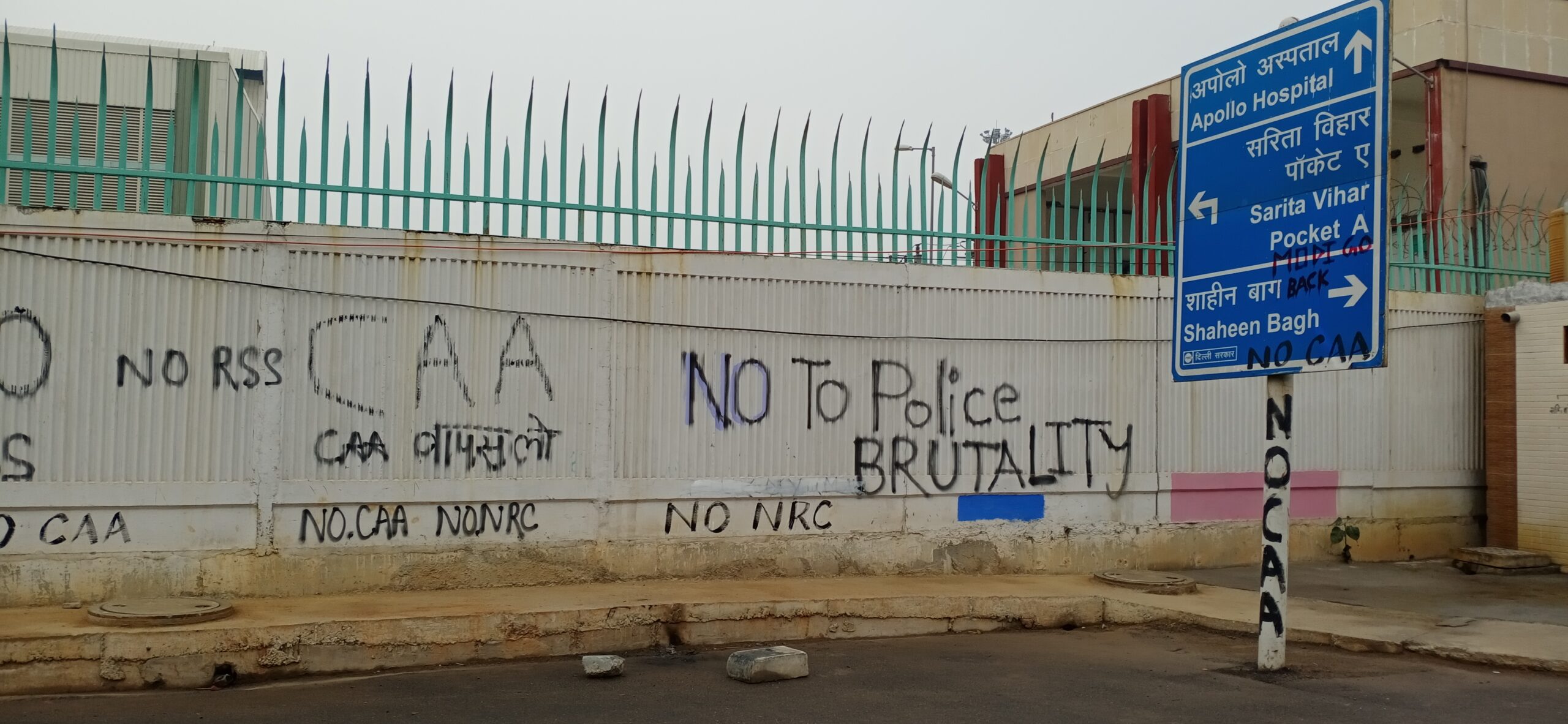
“See, in 1947, we were told that India became a sovereign nation and a sovereign democracy, but if you look at what the Indian state did from midnight of 1947 onwards, that colonised country, that country that became a country because of the imagination of its coloniser—the British drew the map of India in 1899— so that country became a colonising power the moment it became independent, and the Indian state has militarily intervened in Manipur, in Nagaland, in Mizoram, in Kashmir, in Telangana, during the Naxalbari uprising, in Punjab, in Hyderabad, in Goa, in Junagarh.”
[Source: Arundhati Roy on Kashmir, colonialism, & justice, speech on Hostile Homelands here ]
“There is an open apartheid emerging in India, against Indian Muslims, enabled not just by widespread Islamophobia, but equally through the direct backing of the government and police forces. Muslims are targeted not only for being visibly Muslim in public spaces but equally within the four walls of their homes. Akin to Israeli Prime Minister Ariel Sharon who had earned the name of “Bulldozer” for his relentless policy of demolition of Palestinian homes, Yogi Adityanath- the chief Minister of Uttar Pradesh, has earned a similar reputation for his demolition policies as Bulldozer Baba“
[Source: Invisible Citizens- The Everyday Architecture of Apartheid in India by Sara Ather in Vox Ummah here ]
“Already complicit in Israel’s genocide through weapons production and political support, India now deepens its alignment with a new trade deal. To put it simply, it is a pact that ties India and Israel’s economies for the long run. It does appear that a significant goal of this deal is to protect Adani’s investments in Haifa Port, as well as an attempt to keep the India Middle East Corridor (IMEC) – an economic corridor linking India to western markets – alive. It is also a vehicle for the ongoing project of facilitating wide economic integration between India and Israel with the Middle East.”
[Source: With new investment pact, India moves to bind its economy to Israel by Azzad Essa in Middle East Eye here ]
Solidarity with People’s Struggles
Understanding subimperialism, and the role of the UAE, Rwanda and India as key subimperial powers, helps us understand how regional geopolitics, occupation and genocide, and global capitalism is being maintained and reshaped today.
It is important we do not allow post-colonial nation-states to victimize themselves as vulnerable or defenseless when they are dominant powers in their regions controlling trade, militaries, infrastructure, and resources.
By seeing the similarities of how these subimperial power structures operate, we can meaningfully engage in solidarity with resistance movements and peoples’ struggles challenging these subimperial powers!