
For this month’s study in struggle, we read about AI and all the ways people around the world are “Resisting, Refusing, Reclaiming, Reimagining”.
Dan McQuillan states about AI, “It’s important to realise AI isn’t a powerful technology, at least not in the sense that’s claimed for it. All it can do is correlations; there’s no causation, no physics model – just pattern-finding, and now pattern-generation. It’s also very reductive and abstracting, and not really able to deal with the context or complexity of the world.”
The use of AI has exploded through integration into education, hospitals, policing, and the military, but AI is not inevitable. AI – the catch-all marketing term – often refers to language learning models (Claude, ChatGPT, Gemini, CoPilot etc), Generative Image Models, Speech and Audio Models, etc.
Big Tech is putting the planet and people on the line to reduce humans to predictable algorithms unable to form connections and care for each other in the pursuit of efficiency and comfort. Underneath the claims of efficiency and helping people, Big Tech has amassed power and ground to surveil, destroy, and strip people of autonomy. The readings and resources outline the small pool of people who are “benefiting” from the boom of AI, while the large majority of the world – namely, Black and Brown communities and migrants are dealing with all the horrifying consequences of it. And all the ways these communities are resisting and reimagining this dystopian reality.
Facilitated by one of our network members, this month’s resource covers the dangers of AI and the fierce resistance of communities.
We offer a summary of our readings on refusing AI below, as well as a curated list of movements resisting AI, and toolkits and resources for resisting AI.
What exactly is AI?
“AI” is a marketing term and political project that refers to a number of technologies, new and old, including: Pattern recognition algorithms that produce “new” text, videos, or images based on copies of existing, human-created materials. Applications (apps) like chatbots, image generators, and virtual assistants. These technologies are not actually intelligent: the AI project is about increasing the value of these technologies by marketing them as having human qualities, while cutting costs to devalue real human labor & skill. Human interaction is replaced by a fantasy one-stop answer shop.” – Library Freedom Project
Source: AI FAQ – What’s the deal with AI?
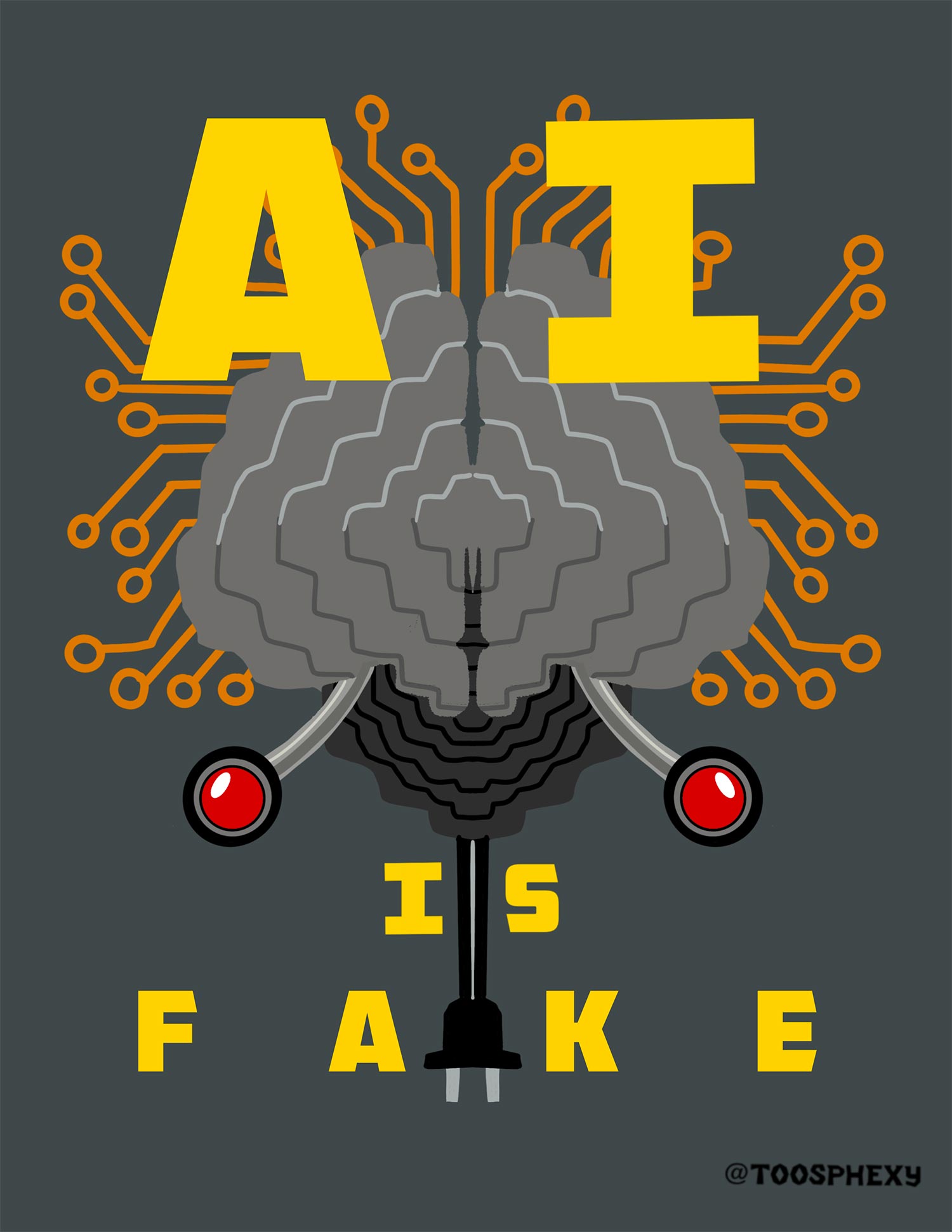
AI is built on cheap labour
“The populations outside of the West are still often simply treated as either cheap labor or as valuable data. At the same time, these populations’ natural environments are extracted for the building-out of essential AI infrastructures. Contemporary resistance to AI and to data centers needs to be understood as a refusal of these afterlives of colonialism.” – Thomas Dekeyser
Source: Why refusing AI is a fight for the soul (archive version here)
Impacts of AI
“Employers are using AI-driven automation to deskill and displace workers and “gigify” work. AI software is built on the mass appropriation of human creative and intellectual work without consent or compensation. Our personal and professional data are scraped, sold and fed into systems that profit from our stolen labour, likeness and social lives. Rather than being able to automate our labour, that work is fundamentally transformed into a more “scalable” task, where the intrinsic value humans bring to their work is deemed worth sacrificing for corporate profit.
The environmental costs are staggering, as data centres consume enormous amounts of energy and drinking water, while the extraction of rare minerals devastates communities in the Global South. And AI systems frequently replicate and deepen structural inequalities, embedding racial, gender and economic biases in work, governance and public services.”
Source: A roadmap for building BC’s AI public policy framework
AI Doesn’t Make Life Better
“The kind of life deemed meaningful, within the AI narrative, is one that is efficient, fast, and intelligent. This is simply unconvincing to many. For them, AI promises not emancipation or new powers — such as that of superintelligence — but a further diminishing of their ability to be in tune with what actually matters to them: community, care, growth.” – Thomas Dekeyser
Source: Why refusing AI is a fight for the soul (archive version here)
AI Revolution Is Crushing Languages
“The rise of the internet, alongside decades of American hegemony, made English into a common tongue for business, politics, science, and entertainment. More than half of all websites are in English, yet more than 80 percent of people in the world don’t speak the language. Even basic aspects of digital life—searching with Google, talking to Siri, relying on autocorrect, simply typing on a smartphone—have long been closed off to much of the world. And now the generative-AI boom, despite promises to bridge languages and cultures, may only further entrench the dominance of English in life on and off the web.” – Matteo Wong
Source: The AI Revolution Is Crushing Thousands of Languages
Won’t AI give disabled people more freedom?
- They want disabled people to have ChatGPT instead of having human rights.
- We don’t need tech that tries to ‘fix’ people; we need to fix society so it supports people to have autonomy.
- At the end of the day, everyone depends on other people, even the tech bros, and any of us can become disabled through age, Long Covid or whatever.
- Disabled people are used to hacking tech to make it work for them, but AI is the least hackable.
– Dan McQuillan
Source: AI and Disability
Border Necrotechnics
“Border necrotechnics names the assemblage of automated systems, databases, and surveillance architectures through which states and corporations decide which lives are rendered killable, deportable, or indefinitely surveilled at and beyond the border.” – Petra Molnar
Source: The Racial Necrotechnics That Lead to Death By Design at Automated Borders
Digitized borders to instill old racial order
“Digital technologies also lend a veneer of scientific objectivity to opaque and complex decision-making that converts political choices about who is welcomed and who is feared into technical decisions, further obfuscating responsibility. What modern digitized borders do is not a new type of racism but rather a reinscription of the old racial order made normalized and more difficult to contest…
“The reparative lens can extend further still. Global north countries that industrialized through colonial extraction are the same countries whose emissions now render whole regions uninhabitable, displacing the people least responsible for the crisis, and the same countries that export weapons and fund the conflicts from which people flee. Displacement is not misfortune that happens elsewhere and washes up in Ceuta by accident. It is manufactured by the very states that then deploy drones and risk algorithms against the people displaced. But repositioning migration as reparations removes seeing freedom of movement as a charity and admission as some act of benevolence or generosity.” -Petra Molnar
Source: The Racial Necrotechnics That Lead to Death By Design at Automated Borders
AI is anti-worker and anti-planet
“AI is useless for social reproduction, because a shoddy simulation is no substitute for real care. You can’t make worker-friendly AI; it’s anti-worker from top-to-bottom. You can’t make planet-friendly AI; it burns resources and produces bullshit. The whole AI assemblage is Epstein tech; not simply because the guy himself was involved in it, but because the apparatus of AI is a concentrated network of masculine power which enables abuse at scale.” -Dan McQuillan
Source: Dan McQuillan’s speaker notes from Resisting Big Tech Empires
Big Tech Empire
“While Big Tech may not be an empire in itself, the AI incorporates have some characteristics that are very reminiscent of the East India Company; they’re very ideological, they’re very interventionist, and they’re increasingly wedded to military adventurism.” – Karen Hao
Source: Naomi Klein & Karen Hao: The Empire of AI and the Fight for Our Future
AI Resistance in Action
“Kauna Ibrahim Malgwi, a former content moderator and licensed clinical psychologist, developed an intervention plan that combines psychotherapy, expressive arts, peer support, and community healing to provide sustainable mental health care for data workers who train AI systems. A pilot program is now underway to support 20 to 50 workers in Kenya, with the goal of building a scalable model for long-term structural care.”
Source: The World Is Already Resisting AI. Now, There is a List to Prove It
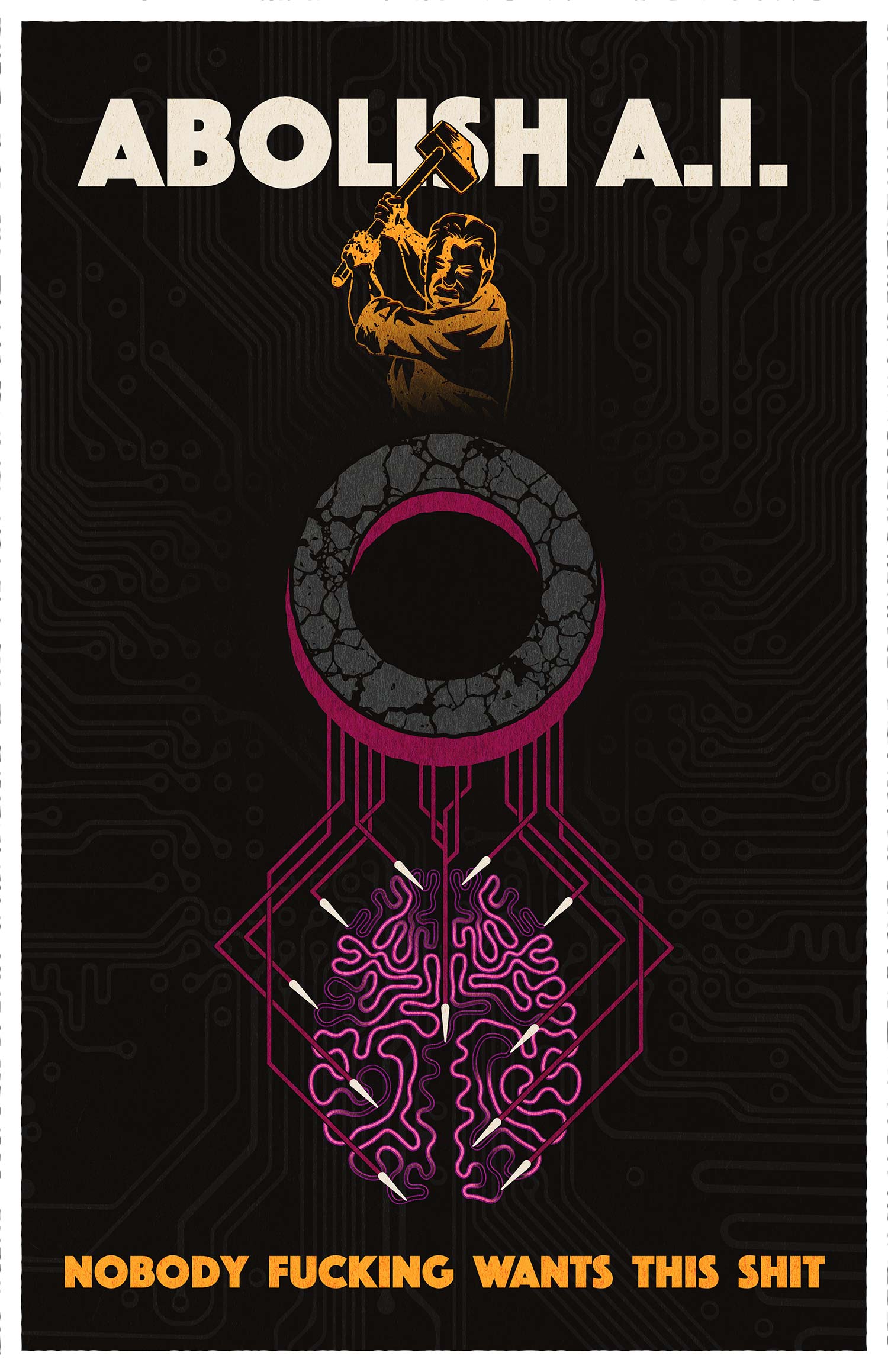
At Google: Organising at the digital arms dealer
“Yet the central obstacle facing tech workers is not the difficulty of consolidating or sharing information, however deliberately companies may try to obstruct this. Our biggest challenge is that the tech industry has little history of unionisation. Project Nimbus represents the first experience of organised labour for many tech workers. With support from organiser networks and established unions, we have focused on providing organiser training to those getting involved. This work is essential because, if we are ever to succeed, meaningful relationships must be built among workers who have been systematically isolated and fragmented into silos. Workers must also come to recognise the collective power they hold, even in the face of explicit threats to their livelihoods.”- No Tech For Apartheid
Source: At Google – Organising at the digital arms dealer (No Tech for Apartheid)
Curbing AI Giants
Timnit Gebru used to believe it was possible to curb tech giants’ worst impulses from the inside out.
She tried it herself at Microsoft, where in 2018 she coauthored a seminal paper that revealed just how bad commercial facial recognition systems—including Microsoft’s—were at detecting Black, female faces. The paper did prompt Microsoft to tweak the accuracy of its system, but Gebru viewed that action as a half-step when the company could have stopped developing facial recognition technology altogether.
Source: Why Timnit Gebru wants AI giants to think small
Spotlight on Te Hiku: te reo Maori revitalization project
“Within 10 days, Te Hiku amassed 310 hours of speech-text pairs from some 200,000 recordings made by roughly 2,500 people, an unheard-of level of engagement among researchers in the AI community. The amount of data was still small compared with the thousands of hours typically used to train English language models, but it was enough to get started. Using the data to bootstrap an existing open-source model from the Mozilla Foundation, Te Hiku created its very first te reo speech recognition model with 86% accuracy.”
Source: A new vision of artificial intelligence for the people (te reo Maori revitalization project)
Resisting, Refusing, Reclaiming, Reimagining
“Challenging this inevitability is the animating premise behind the AI Resist List, a collaboratively built, publicly accessible database documenting acts of resistance. The project — which spans legal challenges, worker organizing, community campaigns, artistic interventions, and technical tools — was built by a team of researchers, journalists, and critical scholars working across seven time zones. The core claim of the AI Resist List project is simple: the “scale at all costs” approach to AI development is not inevitable. – Petra Molnar
Source: The World Is Already Resisting AI. Now, There is a List to Prove It
Full list of resources
- AI FAQ – What’s the deal with AI?
- AI data centres are fuelling climate destruction
- The Racial Necrotechnics That Lead to Death By Design at Automated Borders
- The AI Revolution Is Crushing Thousands of Languages
- Q&A: AI and Disability
- OpenAI admits AI hallucinations are mathematically inevitable, not just engineering flaws
- Infrastructural Imperialism
- Naomi Klein & Karen Hao: The Empire of AI and the Fight for Our Future
- Why refusing AI is a fight for the soul (archive version)
- The revolt against Meta’s ‘pervert glasses’ is part of a growing storm
- Is an Anti-Fascist Approach to Artificial Intelligence Possible? An interview with Dan McQuillan
- An Ethical Curriculum in the Context of Gen AI (Indigenous perspective) pp. 8-11
- Prof Casey’s how-LLM-works videos
- Transcribing for Fun and Profit (a critique to UBC forcing Genio AI to students needing note-taking accomodations)
Movements Resisting AI
- A roadmap for building BC’s AI public policy framework
- The World Is Already Resisting AI. Now, There is a List to Prove It.
- The Fight Against AI Data Centers Is Spreading Globally
- Collective Action in Tech
- A new vision of artificial intelligence for the people (te reo Maori revitalization project)
- Why Timnit Gebru wants AI giants to think small
- At Google: Organising at the digital arms dealer (No Tech for Apartheid)
- You Can’t Drink Data: Native Communities Are Resisting the AI Death Cycle
- These Maine librarians are helping patrons resist AI and Big Tech (archived version
- Electronic Frontier Foundation – AI campaigns
- Get with the times — here’s what a ‘Luddite’ means today
- DAIR’s Refugees and AI Project
- Stop the Data Centre(s) – Vancouver
- Pause AI in BC Schools
Toolkits for Refusing AI
- Tressie McMillan Cottom’s refusal video clip at minute 59:39 – 1:01:50
- Zine on AI refusal: The Roots of this Tree are Rotten!
- Zines about community, imagination, and grassroots empowerment
- Want to Fight Back Against Big Tech? Start Here with Tressie McMillan Cottom’s reading list (archived version: here)
- No Data Centers Toolkit by Honor the Earth
- Resisting AI Data Centre Development in Canada
- The Civil Society Summit on the AI Industry (recordings & resource guide)
- How to talk about “AI”
- How to disable or avoid intrusive AI
- How to Train Your Chatbot
- Mediagraphy of AI and Big Tech Critical Sources