In July’s Study in Struggle, we were honoured that Queer Collective for Palestine (@qc4pvancouver) curated readings and facilitated a discussion about pinkwashing. From Israel’s genocide and ethnic cleansing in Gaza and throughout Occupied Palestine to India’s military occupation of Kashmir, LGBTQI+ culture and identities are exploited to conceal the brutal colonial violence enacted by these settler-colonial states .
What is Pinkwashing?
“[Pinkwashing] refers to the exploitation of LGBTQI+ culture and identities for public relations purposes and can be carried out by any business, political entity or individual… the state of Israel has long been one of its worst proponents.
In this context, pinkwashing refers to how the Israeli state, authorities, or organisations use a pro-LGBTQI+ agenda – or weaponise LGBTQI+ identity – to mask or distract from all elements of its ongoing Zionist settler-colonial project, which includes brutal military occupation, ethnic cleansing, illegal settlements, apartheid, and countless breaches in human rights and international law.”
Source: “What is Pinkwashing?” by Elias Jahshan in Shado Magazine, May 15, 2023 here
Pinkwashing as Colonial Violence
“When queer Palestinians are spoken about by Israel’s defenders, it is only to paint a portrait of individual victimization that reinforces a binary between Palestinian backwardness and Israeli progressiveness. These portrayals suggest that Palestinian society suffers from pathological homophobia, and that no dissenting voices could ever survive for long within it. Pinkwashing tells queer Palestinians that personal (and never collective) liberation can only be found by escaping from their communities and running into their colonizer’s arms. The pervasive myth of Palestinians finding “queer refuge” in Israeli cities flies in the face of the actual policies of the colonial state, which are premised on the exclusion and destruction of Palestinians—queer, trans, or otherwise. The fantasy of Israeli humanitarianism falls apart as soon as the colonial situation is taken into account. There is no “pink door” in the apartheid wall.”
AlQaws places emphasis on pinkwashing as colonial violence in order to uncover Israel’s deeper sexual and gender politics. By rejecting colonial fragmentation and refusing to allow a wedge to be driven between the self and society, we are able to combat our exclusion and claim a place for ourselves in our communities and in our struggle. In alQaws’ work, Palestinian queerness is not simply an identity, but a radical approach to political mobilization and decolonization.
What does this mean for international solidarity activists and for Palestinians organizing in the diaspora? This document was conceived in the hopes of reorienting anti-pinkwashing work to center queer Palestinian voices and incorporate approaches that have developed throughout two decades of grassroots organizing in Palestine. In activist circles based in the Global North, pinkwashing has largely been regarded as a propaganda strategy and fought through campaign-based anti-pinkwashing initiatives. Drawing on the analysis of pinkwashing as colonial violence will not only allow activists to better combat instances of Israeli propaganda, but will situate pinkwashing within its broader settler-colonial context and allow us to make connections to other forms of colonialism and gendered/sexual oppression. Anti-pinkwashing work is conducted in the spirit of internationalism and anti-imperialism, but we also hope for this resource to live in dynamic local organizing, and evolve according to the context it is read and used in.”
“Beyond Propaganda: Pinkwashing as Colonial Violence” by alQaws & Queers in Palestine in alQaws October 2020 here
Discussing Homonationalism
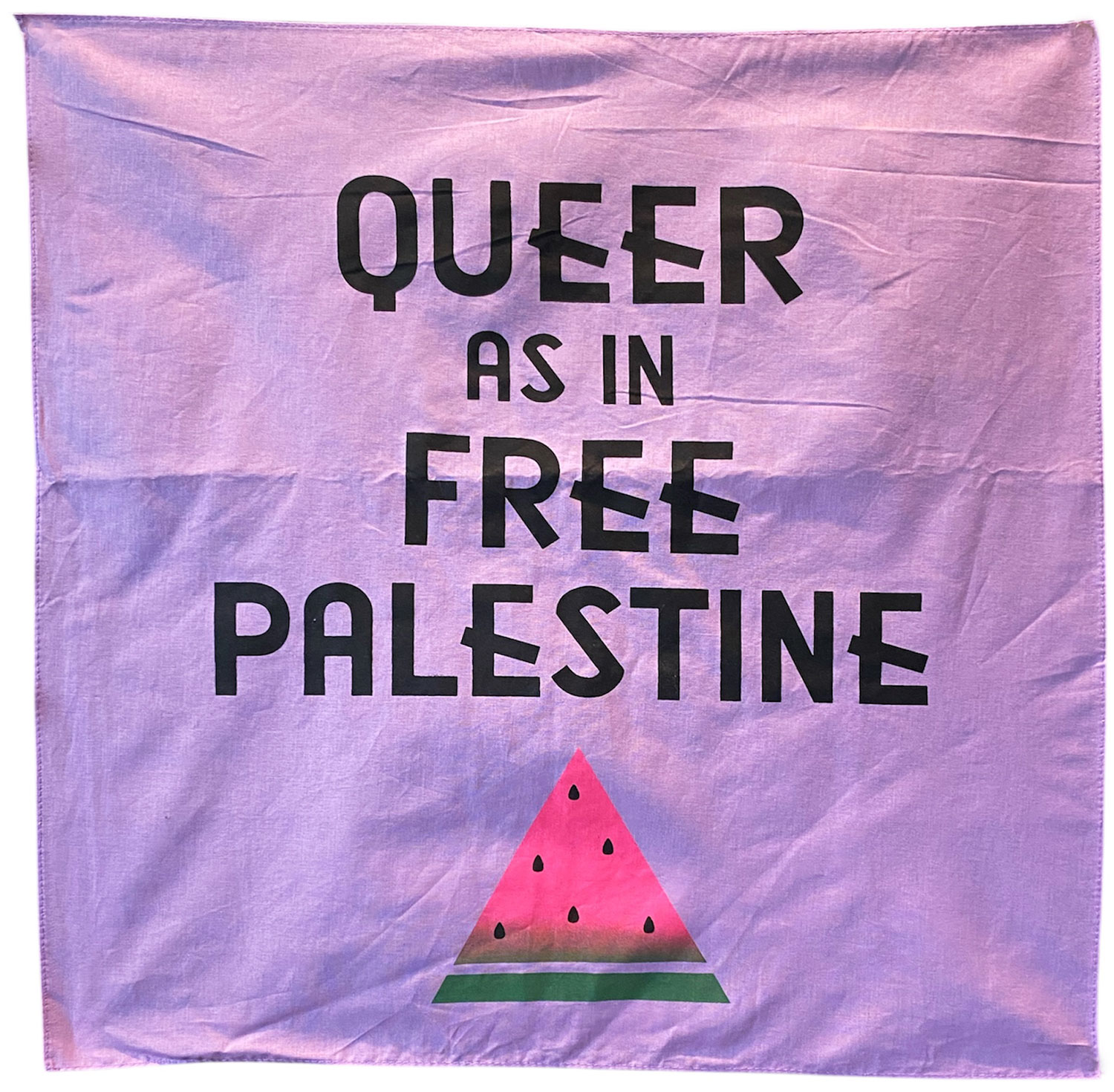
Homonationalism … describe[s] the phenomenon of queer rights being increasingly incorporated into nationhood. Queer bodies become benefactors of “measures of benevolence” by the state in the forms of“tolerance and diversity,” domesticating a once minority for use as a nationalistic tool against other minoritized populations within the nation.This internal process is mirrored in external advertising of countries as gay-friendly or not as a measure of modernity, ultimately reestablishing international relations through hierarchy based on their supposed gay-friendliness. The globalization of the homonationalism phenomenon is marked by american exceptionalism, whereby gay-friendliness is defined on american ideals of sexuality and the goalpost of modernity is structured on american society. Homonationalism allows the practice of pinkwashing, whereby nation-states like israel appropriate liberatory queer politics to evade responsibility for human rights violations and to justify foreign intervention in the name of progress for queer rights as an alternative for Islamophobic scare tactics to mask fortifying political-economic strongholds
Source: From Kashmir to Palestine zine by Zoya Bootwala here
A Liberatory Demand from Queers in Palestine
“We refuse the instrumentalization of our queerness, our bodies, and the violence we face as queer people to demonize and dehumanize our communities, especially in service of imperial and genocidal acts. We refuse that Palestinian sexuality and Palestinian attitudes towards diverse sexualities become parameters for assigning humanity to any colonized society. We deserve life because we are human, with the multitude of our imperfections, and not because of our proximity to colonial modes of liberal humanity. We refuse colonial and imperialist tactics that seek to alienate us from our society and alienate our society from us, on the basis of our queerness. We are fighting interconnected systems of oppression, including patriarchy and capitalism, and our dreams of autonomy, community, and liberation are inherently tied to our desire for self-determination. No queer liberation can be achieved with settler-colonization, and no queer solidarity can be fostered if it stands blind to the racialized, capitalist, fascist, and imperial structures that dominate us.”
Source: A Liberatory Demand from Queers in Palestine here
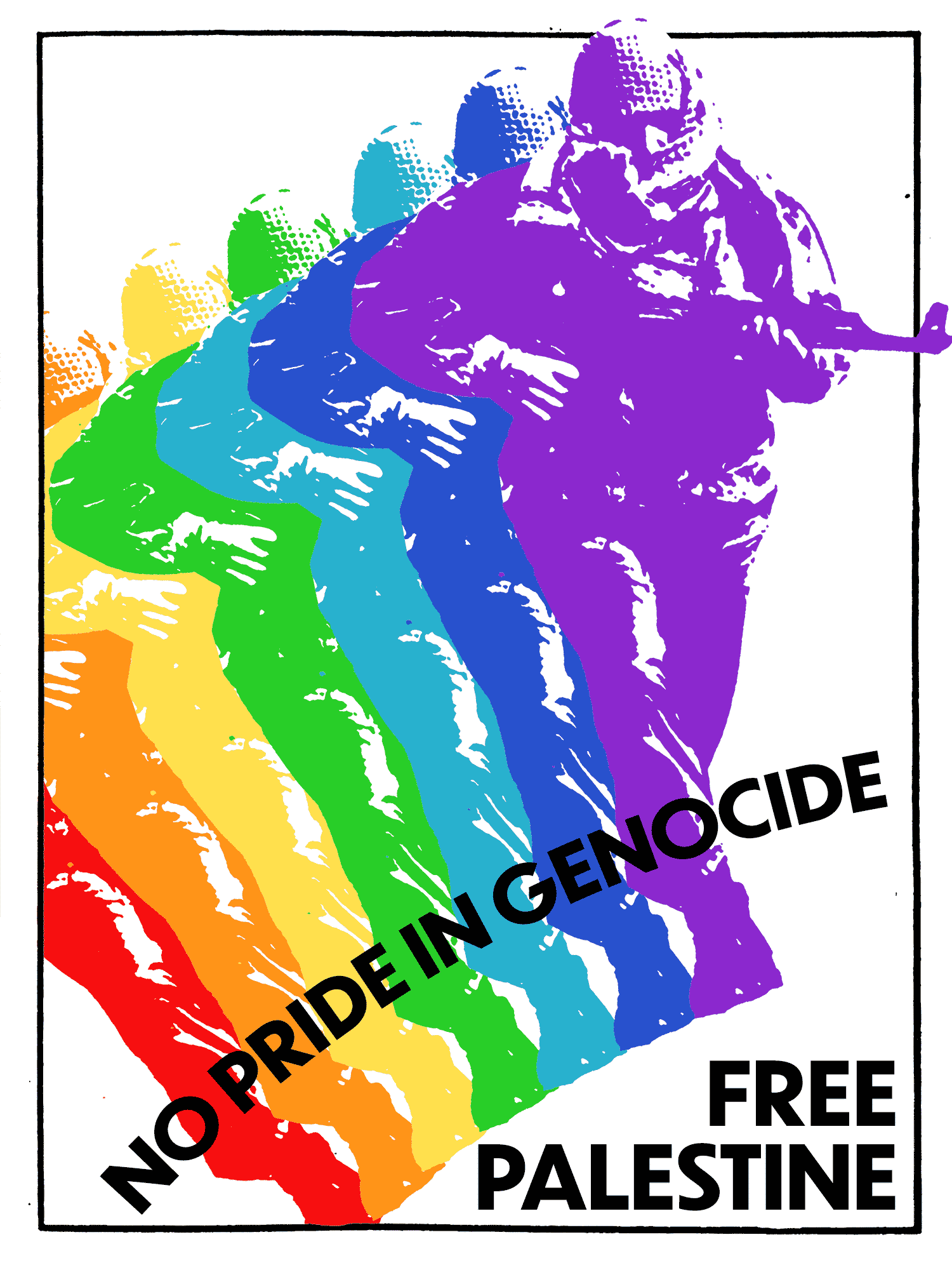
No Pride In Genocide
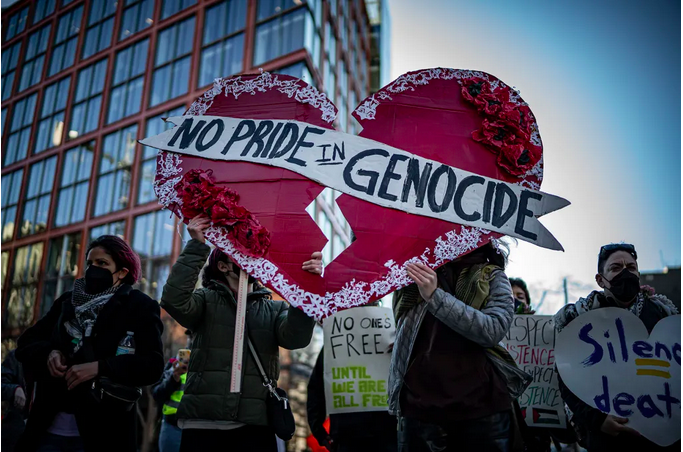
“When Rauda Morcos, a Palestinian citizen of Israel who is a human rights lawyer and award-winning activist, heard that Tel Aviv planned to mark Pride this year, she was stunned. ‘Is there no sense of humanity to realise that there are people being bombed every day in Gaza by your own country [Israel]? And you’re calling for Pride and equal rights for queer people? Who cares at the moment if you have equal rights [as queers]? I honestly don’t care, because if we don’t have equal rights as humans, it doesn’t matter…In fact, it’s always the wrong time and it’s always the wrong topic, because ‘there is no pride in occupation, whether it is 2006 or now. “
Source: “‘No pride in occupation’: queer Palestinians on ‘pink-washing’ in Gaza conflict” by Emma Graham-Harrison in The Guardian. June 16, 2024 here
A look at Imperialist Feminism
“In the context of Palestinian queer and trans rights, imperialist feminism and broader Western advocacy can … exhibit a form of interventionism that overlooks the complex realities on the ground. This is particularly evident when Western narratives focus on the rights of queer and trans Palestinians exclusively through the prism of oppression by Palestinian society or governance, without fully acknowledging the compounded challenges posed by the Israeli occupation and ongoing genocide.
“While societal conservatism is often cited as a barrier to queer and trans rights in Palestinian society, it is essential to understand that the Israeli occupation and genocide block Palestinian society from engaging in the kinds of societal discussions that would open up space for addressing gender and sexuality. The occupation imposes material, legal, and social constraints that make conversations around queer and trans rights extremely difficult. Haneen Maikey’s work effectively analyzes how these blockages operate, showing that the occupation not only stifles public discourse but also curtails the development of spaces where Palestinian society can grapple with these issues on its own terms. Rather than attributing the lack of progress solely to social conservatism, it is important to recognize how the occupation systematically prevents the emergence of such discussions.
Palestinian queer and trans activists frequently highlight the need for intersectionality and solidarity, underscoring how their struggles for gender and sexual liberation are intrinsically linked to resisting the Israeli occupation. Groups like alQaws work within the context of Palestinian culture and the realities of occupation, striving to create inclusive narratives and spaces that respect both national identity and sexual and gender diversity. They actively resist imperialist feminist frameworks that view Western intervention as necessary for their liberation. As Palestinian scholars and activists such as Angelique Abboud and Haneen Maikey have shown, the queer and trans movements in Palestine are deeply embedded within the broader resistance to colonialism, and their activism cannot be divorced from this context.”
Source: “Imperialist Feminism” by Omi Salas-SantaCruz in A Journal for Body and Gender Research. Winter/Spring 2025 here
Reflecting on Queerness in Times of Genocide
We must continue to divest from identity politics and the pressure to frame our work only as LGBT and queer and not as an active part of building our liberation. While homophobia and transphobia don’t disappear in times of war – and may even increase – we have the responsibility to find ways to engage with society and understand the relationship between sexual & gender violence and the violence of colonialism against us. While our queerness was diminished during these painful months, our mere Palestinian-ness is undergoing the most brutal forms of literal erasure. Many Palestinian queers speak in our community spaces about the latter and not the first.
Source: “Reflecting on Queerness in Times of Genocide” by alQaws & Queers in Palestine in alQaws June 2024 here
No Co-resisting with Colonizers
Much like pinkwashing, “normalization” also distorts our understanding of the colonizer’s inherently supremacist relationship to the colonized. Normalization is broadly defined as any effort to naturalize the settler-colonial reality by obscuring the colonial power dynamic. Both pinkwashing and normalization promote the belief that the Palestinian reality can only be understood in reference to Israelis, who are positioned as our “saviors,” or in this event, as our “co-resistors.” Crucially, within this framework, there is no room for autonomous and independent Palestinian resistance.
Atshan’s approach, which is also promoted in his recent book, reveals a deep alienation from the priorities and convictions of the Palestinian queer movement, which can and does exist without the patronage of queer settlers. Independence from colonial civil society is necessary to meaningfully address gender and sexuality issues within Palestinian society. Proposing “co-resistance” between queers on opposing sides of the colonial divide relies on a shallow identitarian framework that ignores that formative and innate differences that prohibit such resistance. It also upholds pre-existing structures of power and privilege that hinder queer Palestinian life.
Source: No Queer “Co-Resistance” With Colonizers: Confronting Normalization and Pinkwashing” by alQaws & Queers in Palestine in alQaws December 2020 here
Full Resource List
A Liberatory Demand from Queers in Palestine – Queers in Palestine
What is Homonationalism – Novara Media (7m video)
What is Pinkwashing – Shado Mag
From Kashmir to Palestine Zine
No pride in occupation – The Guardian
Reflecting on Queerness in Times of Genocide – alQaws & Queers in Palestine
Beyond Propaganda: Pinkwashing as Colonial Violence – alQaws
No Queer “Co-Resistance” with Colonizers: Confronting Normalization and Pinkwashing – alQaws
No Pride with Genocide! – Queers in Palestine –
Matt Bernsein The Power of Pinkwashing video (in podcast form here)